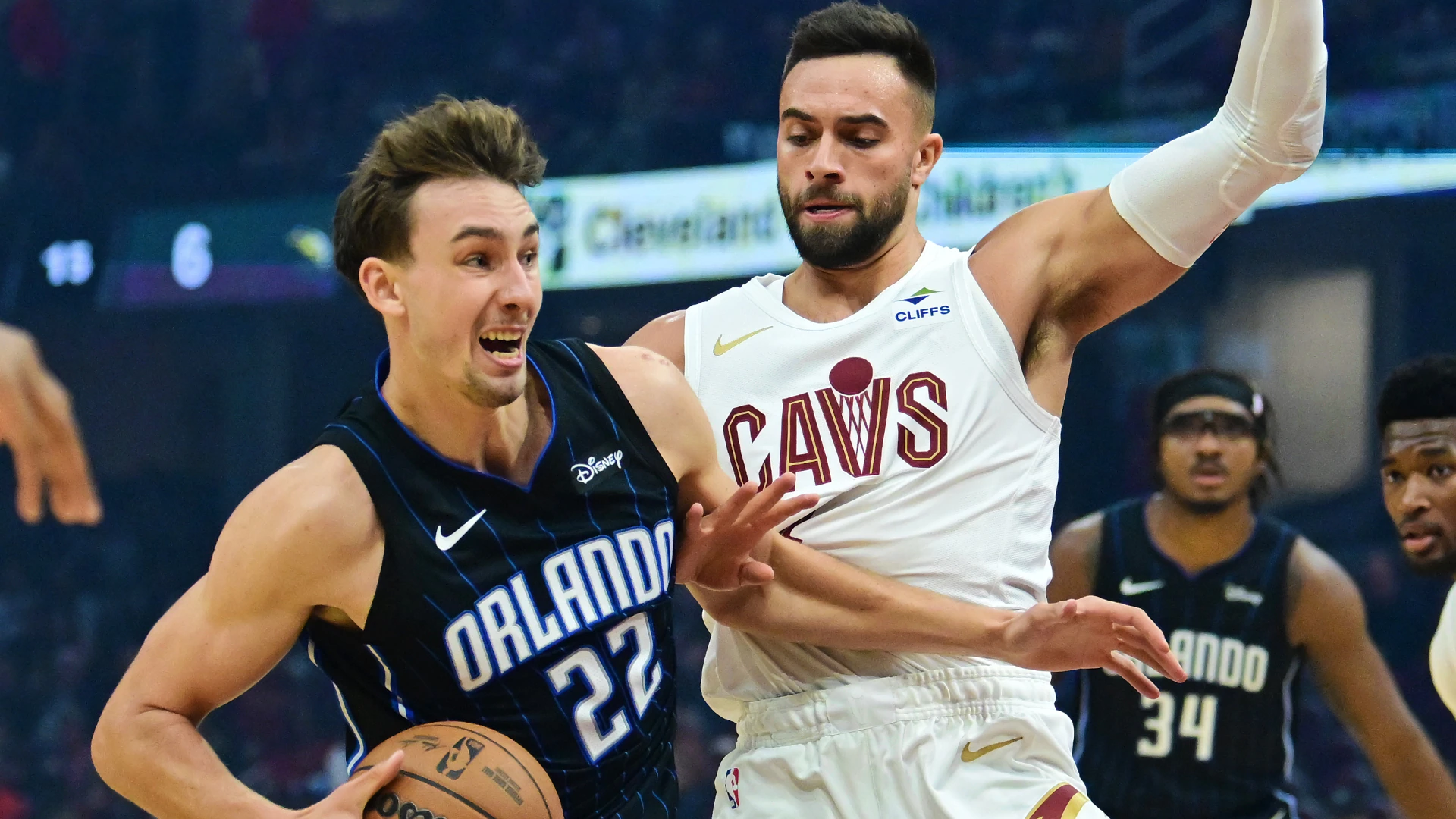
The clash between the Orlando Magic and the Cleveland Cavaliers has quietly developed into one of the most intriguing matchups in modern NBA basketball. While it may not have the historical weight of Lakers–Celtics or Bulls–Pistons, it carries a distinct flavor of youth, intensity, and tactical depth that mirrors the new generation of the league.
Both teams are built on strong drafting, disciplined coaching, and balanced rosters. The Cavaliers represent an established contender led by Donovan Mitchell and Darius Garland, while the Magic embody the new wave — a young, defensive-minded team anchored by Paolo Banchero and Franz Wagner. When these two franchises meet, it’s more than just a regular-season game; it’s a glimpse into the NBA’s future.
Evolution of the Rivalry
Historically, the Orlando–Cleveland rivalry was never at the forefront of NBA drama. However, their matchups have gained traction in recent seasons. The turning point came during the 2022–23 season when both teams began showing signs of transformation — the Cavaliers becoming a playoff-caliber force under coach J.B. Bickerstaff, and the Magic developing under Jamahl Mosley into a competitive, youthful core.
By the 2024–25 season, the narrative shifted. Each encounter between them began drawing national attention, largely because of their contrasting styles. Cleveland’s structured, half-court offensive system collided with Orlando’s athletic, transition-heavy attack. Games often went down to the final possessions, highlighting how evenly matched they had become.
Team Identity and Style of Play
Orlando Magic: Defense, Transition, and Balanced Scoring
The Magic’s identity revolves around defensive grit and physical versatility. Coach Jamahl Mosley has turned them into one of the league’s stingiest defensive units. They pressure ball handlers, close out on shooters, and use their length to disrupt passing lanes. Offensively, they prefer fast-paced, positionless basketball, where everyone from Banchero to Wagner to Suggs can handle the ball and initiate plays.
Their statistical profile supports that identity:
- Defensive Rating: Consistently among the top ten in the league.
- Points in the Paint: Top five, thanks to Banchero’s strength and Carter Jr.’s presence.
- Turnover Forcing: High, leading to easy fast-break conversions.
The Magic don’t rely heavily on three-pointers, instead focusing on attacking mismatches and creating contact near the rim. Their free-throw attempts per game rank among the highest in the Eastern Conference.
Cleveland Cavaliers: Half-Court Precision and Star-Led Offense
Cleveland, on the other hand, operates through discipline and spacing. With Donovan Mitchell as their offensive engine and Darius Garland as the orchestrator, they thrive on controlled possessions. The Cavaliers excel in pick-and-roll execution and offensive rebounding, led by Jarrett Allen and Evan Mobley.
Their statistical tendencies highlight their strengths:
- Offensive Efficiency: Among the top ten teams.
- Three-Point Attempts: Moderate but accurate — especially from Strus and Garland.
- Rebounding Margin: One of the best in the East.
The Cavs play a slower pace compared to Orlando, preferring set plays and methodical ball movement. Their half-court schemes often force opponents into defensive rotations, creating open looks from beyond the arc.
Statistical Overview: Comparing the Teams
| Category | Orlando Magic | Cleveland Cavaliers |
| Average Points per Game | 111.2 | 114.8 |
| Opponent Points per Game | 106.9 | 108.5 |
| Field Goal % | 46.5% | 48.1% |
| Three-Point % | 35.4% | 37.9% |
| Rebounds per Game | 46.1 | 44.3 |
| Assists per Game | 24.2 | 25.8 |
| Turnovers per Game | 13.8 | 12.7 |
| Defensive Rating | 109.2 | 110.1 |
| Pace | 99.6 | 97.1 |
These averages reveal two well-balanced teams with distinct philosophies. Orlando leans slightly more defensive and athletic, while Cleveland emphasizes efficiency and control. When they collide, the team that dictates tempo usually comes out on top.
Key Matchups to Watch
Paolo Banchero vs. Donovan Mitchell
This duel often defines the tone of the matchup. Banchero, with his size and physicality, challenges Cleveland’s forwards defensively, while Mitchell’s shot-creation and explosiveness put constant pressure on Orlando’s backcourt.
Banchero averages around 22–24 points per game against Cleveland, using his post game and strength to draw fouls. Mitchell, meanwhile, counters with 25–30 points on pull-ups, drives, and transition threes. Their individual battle often turns into a showcase of leadership — who can impose their will on the game first.
Franz Wagner vs. Darius Garland
Wagner’s versatility as a defender and scorer makes him a nightmare matchup for Garland. While Garland’s quickness and creativity are unmatched, Wagner’s size and length allow him to contest every shot. Garland usually leads in assists during their meetings, but Wagner’s all-around contribution often balances the scale — averaging 18 points, 7 rebounds, and 4 assists in these games.
Frontcourt Battle: Jarrett Allen and Evan Mobley vs. Wendell Carter Jr.
This is the tactical heart of every encounter. The Cavaliers rely heavily on their twin-tower setup, but Orlando’s spacing and mobility test it constantly. Carter Jr. and Jonathan Isaac provide rebounding and rim protection, forcing Cleveland to stretch defensively.
Allen’s presence inside, averaging a double-double in their matchups, remains Cleveland’s biggest weapon. However, when Orlando’s shooters get hot, Mobley and Allen are forced to defend farther from the rim — an area where the Magic can exploit mismatches.
Bench Strength and Depth
Both teams boast underrated benches that play pivotal roles.
For Orlando, Cole Anthony’s scoring bursts, Moritz Wagner’s hustle, and Joe Ingles’ veteran shooting provide balance. Their second unit has the ability to change momentum with energy and pace.
For Cleveland, Caris LeVert’s two-way play, Georges Niang’s spacing, and Isaac Okoro’s perimeter defense bring versatility. The Cavaliers’ bench averages more three-point attempts, while the Magic’s reserves contribute more in rebounding and defense.
The contrast in bench styles mirrors the teams’ broader strategies — Cleveland depends on efficiency, Orlando thrives on pressure and effort.
Statistical Comparison of Key Players
| Player | Team | Points | Rebounds | Assists | Field Goal % | 3PT % |
| Paolo Banchero | Magic | 22.4 | 7.3 | 4.9 | 46.8% | 34.1% |
| Franz Wagner | Magic | 19.8 | 6.2 | 3.7 | 47.5% | 36.0% |
| Wendell Carter Jr. | Magic | 13.2 | 8.5 | 1.5 | 52.0% | 32.4% |
| Donovan Mitchell | Cavaliers | 26.7 | 4.4 | 5.3 | 47.1% | 38.6% |
| Darius Garland | Cavaliers | 18.5 | 2.6 | 7.1 | 45.6% | 39.2% |
| Jarrett Allen | Cavaliers | 15.0 | 10.6 | 1.5 | 61.2% | — |
This data highlights how evenly these rosters stack up. Cleveland’s backcourt is more dynamic offensively, but Orlando’s frontcourt provides balance and defense. Both have emerging stars who can control games at any moment.
Tactical Adjustments
Each meeting between these teams is a chess match. Orlando often switches defensive schemes mid-game — alternating between man-to-man, zone, and traps — to keep Cleveland’s shooters off rhythm. The Cavaliers counter with set plays, using Mitchell or Garland in double screens to create space for pull-ups.
Rebounding is another key battleground. Cleveland emphasizes boxing out and positioning, while Orlando relies on energy and timing. When the Magic dominate second-chance points, they usually win.
Transition defense also determines outcomes. Orlando pushes the pace, forcing Cleveland to sprint back. If the Cavs manage to slow the game down, their half-court execution gives them the advantage.
Recent Seasons: Head-to-Head Performance
| Season | Games Played | Magic Wins | Cavaliers Wins | Average Margin |
| 2022–23 | 4 | 1 | 3 | 8.5 |
| 2023–24 | 4 | 2 | 2 | 4.2 |
| 2024–25 | 3 (so far) | 2 | 1 | 5.3 |
These numbers show that the rivalry is becoming tighter every year. The Magic, once considered rebuilding, are now competing head-to-head with a consistent playoff team. Each victory feels like a statement — that Orlando is no longer a young team learning, but a team ready to contend.
Coaching Strategies
Jamahl Mosley (Orlando Magic)
Mosley’s coaching philosophy emphasizes defensive effort, ball movement, and player development. He gives his young core the freedom to make decisions, building confidence and chemistry. Against Cleveland, Mosley often adjusts rotations based on matchups — sometimes using smaller lineups to speed up the tempo or larger ones to crash the boards.
J.B. Bickerstaff (Cleveland Cavaliers)
Bickerstaff values structure and discipline. His offensive playbook is designed around spacing and timing, allowing Garland and Mitchell to exploit mismatches. Defensively, he prefers conservative rotations but trusts Mobley and Allen to anchor the paint. His focus on fundamentals keeps the Cavaliers consistent, even in close games.
The contrast in coaching styles makes their meetings tactically rich. Mosley’s experimentation challenges Bickerstaff’s system, creating unpredictable outcomes.
Analytical Breakdown
From an analytics perspective, the rivalry reflects the balance between efficiency and energy.
- Effective Field Goal Percentage: Slightly favors Cleveland, due to better three-point accuracy.
- Rebound Rate: Slight edge to Orlando, driven by second-chance points.
- Turnover Ratio: Cleveland protects the ball better, but Orlando forces more takeaways.
- Clutch Time Net Rating (last 5 minutes, close games): Magic +3.2, Cavaliers +4.1 — both excellent, emphasizing how close their contests are.
These small differences explain why most of their recent games are decided in the final minutes.
Star Impact Beyond the Box Score
Statistics don’t always capture the emotional and strategic influence of star players.
Paolo Banchero’s leadership has evolved rapidly. His composure and decision-making under pressure give Orlando late-game stability. He’s not just a scorer but a creator — often drawing double teams and finding open shooters.
Donovan Mitchell’s presence for Cleveland is equally transformative. He brings championship aspirations, setting a competitive tone for his teammates. His ability to explode offensively shifts momentum in seconds.
Both stars are redefining their teams’ identities and pushing them toward long-term contention.
What Makes This Rivalry Special
Unlike traditional rivalries built on geography or history, Orlando vs. Cleveland is rooted in growth and evolution. Both teams symbolize franchises rebuilding the right way — through smart drafting, player development, and patience.
Their games showcase the NBA’s modern era: multi-skilled forwards, defensive versatility, and high basketball IQ. Every encounter feels like a test of maturity and strategy more than just talent.
Future Outlook
Looking ahead, the rivalry is only going to intensify. Both teams have young cores still approaching their prime.
- Orlando’s Future Core: Banchero, Wagner, Suggs, Carter Jr., and Black — all under 25.
- Cleveland’s Core: Mitchell, Garland, Mobley, and Allen — all established but still young enough for long-term success.
If both front offices continue building around their stars, it’s likely these two will meet in multiple playoff series over the next few years. Their balanced styles could make them natural postseason rivals, where every possession counts.
Conclusion: A New Generation Rivalry
The Orlando Magic vs. Cleveland Cavaliers matchup is no longer a quiet fixture — it’s an evolving story of ambition and balance. It features the energy of youth against the experience of structure, the unpredictability of development versus the steadiness of maturity.
Every time they face off, fans witness two teams growing before their eyes, reflecting what the NBA’s future looks like: fast, skilled, intelligent, and team-oriented basketball.
Whether it’s Banchero battling Mitchell, Wagner shadowing Garland, or the Allen–Carter duel under the rim, these encounters consistently deliver drama, strategy, and heart.
This rivalry, once overlooked, now stands as one of the Eastern Conference’s most exciting and meaningful matchups — a showdown of potential, precision, and pride that will continue shaping the next era of NBA basketball.