
Introduction
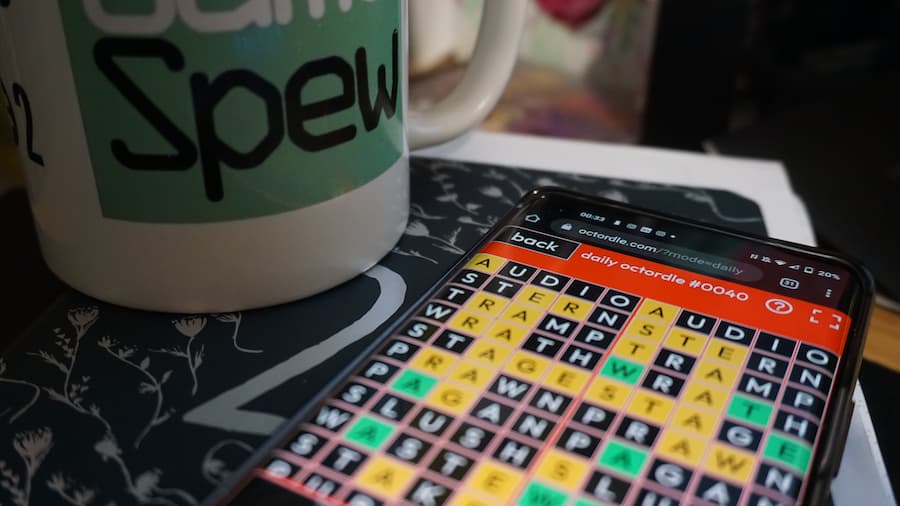
Octordle Sequence is one of the most exciting word puzzle modes for word game lovers. While the original Octordle gives you the thrill of solving eight puzzles at once, Sequence mode pushes the difficulty to another level. You must solve each word in strict order. Only after you crack the first one can you move on to the second, then the third, and so on until all eight are done.
This mode changes how you think, plan, and guess. You can’t scatter guesses across multiple boards to test letters in bulk. Every guess targets the current word only, which means wrong answers hurt more than in the regular game. Players love this because it rewards patience, vocabulary depth, and sharp deduction skills.
The Rules of Octordle Sequence
Understanding the rules is the first step to winning more games. In Sequence mode:
- Eight words to solve – The layout is the same as the classic version, but the rules are different.
- Strict order – The game unlocks one word at a time.
- Limited guesses – The total number of guesses is shared across all words.
- No skipping – If a word is tricky, you must finish it before seeing the next.
This setup means you need to be efficient. A careless early game wastes guesses you will need for later puzzles.
Key Differences Between Regular Octordle and Sequence Mode
| Feature | Regular Octordle | Octordle Sequence |
| Guess order | Any order | Fixed order |
| Board visibility | All at once | One at a time |
| Guessing freedom | High | Low |
| Difficulty | Moderate | High |
In regular Octordle, you can play “letter detective” by testing possible letters across different boards. In Sequence, you’re locked in, so each guess must be more precise.
Why Octordle Sequence Is So Popular
The mode attracts players because it feels like a mini-tournament inside a single game. Here’s why people love it:
- Intense focus – You can’t multitask; your brain locks on one word.
- High tension – Fewer guesses make mistakes costly.
- A sense of achievement – Finishing all eight feels like winning a championship.
- Better vocabulary practice – You encounter rare words more often.
How to Build a Winning Strategy
1. Choose the Right Starter Words
A strong opener sets the tone for the entire run. Popular starters for Sequence include:
- CRANE – Covers common consonants and vowels.
- SLATE – Great mix of letters with frequent use.
- AUDIO – Tests four vowels early.
- TRACE – Balanced and useful for letter positioning.
Starting with the wrong word can waste two or three guesses before you even find solid clues.
2. Maximize Letter Information Early
Your first two guesses should reveal as many new letters as possible. Don’t repeat letters unless you’re testing placement.
Example:
- Guess 1: SLATE (finds an “L” and “E”)
- Guess 2: ROUND (tests different vowels and consonants)
By the second guess, you should know at least 5–7 possible letters in the word.
3. Use Patterns and Common Endings
English words often share endings like “-ING,” “-ED,” “-TION.” Spotting these can save you from blind guessing.
Example:
If you find I_N with several letters ruled out, “SPINE” or “TWINE” become likely candidates.
4. Control Your Guess Spending
Think of your guesses like currency. Spending too much early leaves you “broke” for the later puzzles. Many expert players aim to solve each word in 4–5 guesses maximum.
5. Avoid “Letter Panic”
It’s easy to panic when you have only one or two guesses left. The best move is to stop and think about:
- What letters remain unused
- Which combinations fit English spelling rules
- Whether double letters are possible (e.g., “BLOOM”)
Common Mistakes in Sequence Mode
- Guessing wildly – This eats up guesses and gives poor information.
- Ignoring letter elimination – Players sometimes forget that gray letters can’t be used again.
- Forgetting rare words – Words like “QUILL” or “XENON” appear and throw players off.
- Reusing ineffective openers – Some starters fail to cover common letters.
Mental Skills You Develop by Playing
Octordle Sequence is more than a game — it’s brain training. With consistent play, you sharpen:
- Pattern recognition – Spotting letter arrangements quickly.
- Logical deduction – Eliminating impossible letters with each guess.
- Memory recall – Pulling uncommon words from memory under pressure.
- Time management – Deciding when to take risks.
Example Walkthrough of a Game
Word 1: Start with SLATE → Find “T” in position 3 and “E” at the end.
Guess CRIME → No progress.
Guess WHITE → Reveals “H” in position 1.
Guesss THEME → Solves first word.
Word 2: Starter is CRANE → Shows “A” in position 3 and “E” at the end.
Guess SHADE → Finds “S” at start.
Guess SCARE → Solves.
By Word 7, guesses are running low. The player must think carefully, balancing the urge to solve quickly with the need to avoid wasting attempts.
Advanced Tactics for Experts
- Letter Group Testing – Use a guess like “CHOMP” to test multiple unused consonants in one turn.
- Backup Starter Lists – Have 3–4 backup opening words for variety.
- Word Bank Practice – Play with a list of common Octordle answers offline to improve recall speed.
- Low Guess Challenge – Practice solving with fewer guesses to build efficiency.
Benefits of Playing Octordle Sequence Regularly
- Improves problem-solving under pressure
- Expands English vocabulary
- Builds mental stamina for other puzzle games
- Encourages strategic thinking instead of luck-based guessing
Some players also find it relaxing despite the difficulty, as it keeps the mind fully engaged and away from distractions.
Final Thoughts
Octordle Sequence transforms a fun word puzzle into a mental endurance test. It’s a mode for players who enjoy high pressure, strict rules, and no shortcuts. Success depends on strategy, not luck. With the right openers, careful letter tracking, and efficient guess management, you can improve steadily and start beating the mode more often.
Winning in Sequence mode feels different — every solved word is a step toward total victory, and every guess carries weight. The challenge is tough, but that’s exactly what makes it so rewarding.